RESEARCH / REIMAGINATION / PUBLIC ACCESSATLAS 01 — OCTOBER 2026

A SAHILTAYAL.COM PRODUCTION

POWER.

An atlas of human possibility.

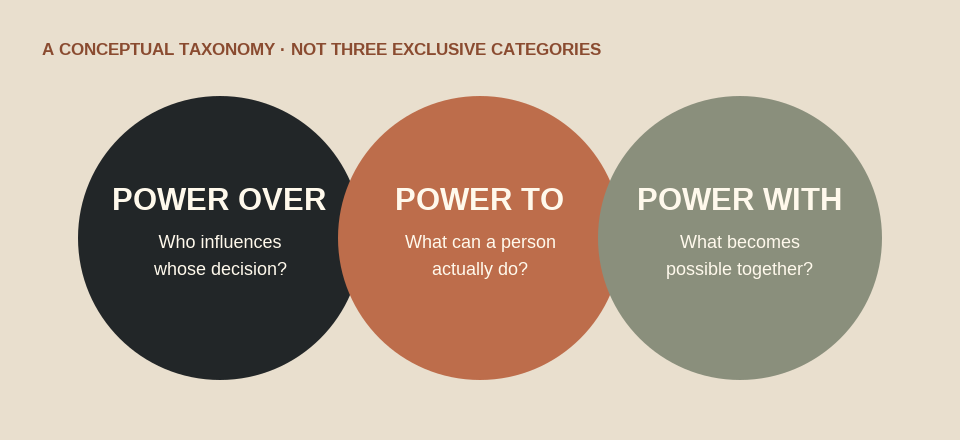
Power is not one thing. It is a changing relationship between what we can do, what others can do, and the conditions that make either possible.

00 / THE PROPOSITION

Who gets to choose?
Who gets to refuse?
Who gets to change the rules?

There is power to build, power to deny, power to care, power to define, power to coordinate, and power that nobody notices until it disappears.

This is a map, not a moral ranking. The site separates theory, illustrative scenarios, historical interpretations, and open questions.

24conceptual rooms
06working investigations
12original essays

01 / EXPLORE THE TERRITORY

The 24 rooms
of power.

Every form of power has a source, a use, a failure mode and a question it cannot answer on its own. Choose a door.

24 rooms · all open for exploration

01 / MaterialPhysical PowerWho can act upon a body, and who can protect it?Explore ↗

Physical capacity is shaped by bodies, tools, environmental hazards, organised force, and the institutions that authorise its use. A person may have strength yet lack the right, equipment, or safety to exercise it.

In everyday life

A neighbour carries a heavy cylinder upstairs while an older resident chooses whether to ask for help.

Institutional lens

Public safety standards and emergency-response infrastructure distribute protection unevenly across places.

WHAT IT CAN ENABLE

Protecting someone from danger, creating accessible routes, and reducing injury exposure.

HOW IT CAN HARM

Using intimidation or force to make disagreement unsafe.

Boundary / counterexample

Force can suppress resistance without winning legitimacy; bodily vulnerability varies with disability, age, workplace design and health.

Where does protection end and coercion begin?

Continue the inquiry: Power Is Not the Same as Status ↗
02 / MaterialEconomic PowerHow many choices can money actually purchase?Explore ↗

Ownership, wages, credit, market access and savings alter the terms on which people can wait, bargain, refuse or invest. Purchasing power is relational: it means little without functioning institutions and goods to purchase.

In everyday life

A freelance designer with savings can reject a bad contract that a financially strained peer must accept.

Institutional lens

Credit conditions and property rights help structure who can open a business and who must rent access.

WHAT IT CAN ENABLE

Funding public goods or giving workers a fair share of surplus.

HOW IT CAN HARM

Making crucial necessities conditional on humiliating terms.

Boundary / counterexample

Not all valuable goods can be bought; money may enlarge options while status, discrimination or care obligations still restrict them.

Who gets to absorb a delay, and who cannot?

Continue the inquiry: Why Money Changes Some Things but Not Everything ↗

03 / InstitutionalPolitical PowerWho gets to make a decision binding on everyone?Explore ↗

Political power operates through representation, offices, legal authority, civic pressure and collective consent, not simply through leaders' personalities. It reaches into the rules of public life and into the capacity to contest those rules.

In everyday life

Residents argue about whether a public park should become paid parking.

Institutional lens

Elected councils and legislatures make decisions through procedures whose legitimacy can still be contested.

WHAT IT CAN ENABLE

Creating accountable public services and channels for participation.

HOW IT CAN HARM

Suppressing opposition, moving decisions outside scrutiny, or manipulating representation.

Boundary / counterexample

An election confers authority to govern, not proof that every action is just or effective.

Who can contest this decision after it is made?

Continue the inquiry: The Person Who Sets the Agenda ↗

04 / InstitutionalInstitutional PowerCan a form decide your future?Explore ↗

An institution converts policies, records, routines and delegated authority into repeatable decisions. A rule can constrain arbitrary behaviour while also hiding assumptions in apparently neutral procedures.

In everyday life

A student's scholarship depends on a documentation deadline their family never received.

Institutional lens

Eligibility rules in universities, banks and public agencies redistribute access and require appeals procedures.

WHAT IT CAN ENABLE

Consistent standards, audit trails and accessible appeals.

HOW IT CAN HARM

Opaque gatekeeping, arbitrary exceptions or rules that protect insiders.

Boundary / counterexample

Written rules do not enforce themselves; people interpret them and may bend them for care or favouritism.

Who wrote the rule, and who can appeal it?

Continue the inquiry: The Architecture of Obedience ↗

05 / RelationalSocial PowerWhich relationships open doors, and which lock them?Explore ↗

Networks create flows of trust, information, invitations, reputation and obligation. Social capital may help a person find work, but access can depend on conformity to group expectations.

In everyday life

A referral gets an applicant an interview before the vacancy appears publicly.

Institutional lens

Professional associations and alumni networks shape access to opportunity without controlling formal hiring rules.

WHAT IT CAN ENABLE

Helping newcomers access introductions and mentorship.

HOW IT CAN HARM

Excluding outsiders through informal clubs, gossip or loyalty tests.

Boundary / counterexample

Being popular does not mean being right; strong networks can turn inward and discourage dissent.

Who is absent from the room where introductions happen?

Continue the inquiry: Power Is Not the Same as Status ↗
06 / SymbolicKnowledge PowerWhat happens when the expert cannot decide?Explore ↗

Evidence, craft, interpretation and information access can change choices. But credibility depends on who can speak, which knowledge counts, and whether decision-makers are willing to listen.

In everyday life

A technician knows the machine is unsafe while the budget holder postpones repairs.

Institutional lens

Scientific advisory bodies may provide expertise while elected officials retain decision authority.

WHAT IT CAN ENABLE

Teaching, public research and informed consent.

HOW IT CAN HARM

Hoarding information or weaponising technical jargon.

Boundary / counterexample

Expertise is domain-specific; a specialist can be mistaken and lived experience can reveal blind spots.

Who knows, who decides, and who bears the consequence?

Continue the inquiry: When Knowledge Has No Authority ↗

07 / SymbolicLanguage PowerWho chose the words we are arguing inside?Explore ↗

Labels, metaphors, translation and repetition make some alternatives easy to see and others hard to articulate. Language can organise shared action, but it cannot abolish material constraints by itself.

In everyday life

A manager calls unpaid overtime 'passion' while a worker calls it uncompensated labour.

Institutional lens

Policy debates often pivot around the definition of eligibility, responsibility and public interest.

WHAT IT CAN ENABLE

Explaining a complex problem clearly and naming neglected harm.

HOW IT CAN HARM

Using euphemisms to conceal costs or dehumanising labels to narrow empathy.

Boundary / counterexample

A powerful phrase may fail when experience contradicts it; listeners actively interpret messages.

What changes when the same fact is named differently?

Continue the inquiry: The Person Who Sets the Agenda ↗

08 / InstitutionalTechnological PowerWho can change the button everyone must press?Explore ↗

Software architectures, data access, technical standards and platform control distribute what users can see and do. Technology embeds policy decisions, even when the interface feels neutral.

In everyday life

A small seller depends on a marketplace whose ranking rules change without notice.

Institutional lens

App stores and payment rails can influence whether a digital service reaches customers.

WHAT IT CAN ENABLE

Open standards, accessibility, user controls and transparent appeals.

HOW IT CAN HARM

Surveillance, lock-in, manipulation or opaque automated exclusions.

Boundary / counterexample

A technically possible action may be legally prohibited or socially unacceptable; technology is not destiny.

Who owns the switch, data and ability to leave?

Continue the inquiry: How Technology Redistributes Agency ↗

09 / InnerPsychological PowerWhich choices feel possible before we even try?Explore ↗

Attention, habits, interpretation, emotional regulation and perceived agency affect how possibilities are noticed and pursued. These capacities are shaped by fatigue, safety, resources and past experience.

In everyday life

A learner postpones asking a question because they assume everyone else understands.

Institutional lens

School feedback and workplace cultures can shape who expects to be heard.

WHAT IT CAN ENABLE

Pausing before reacting and checking a harsh first interpretation.

HOW IT CAN HARM

Blaming people for constraints that are structural rather than personal.

Boundary / counterexample

Confidence is not control; thinking differently does not replace access to food, safety or rights.

Which part is interpretation, and which is a real constraint?

Continue the inquiry: What Kind of Power Is Worth Wanting? ↗

10 / RelationalEmotional PowerCan care be a source of influence without becoming control?Explore ↗

Trust, fear, gratitude, love and shame alter how people coordinate and negotiate. Emotional leverage becomes harmful when affection or belonging is made conditional on obedience.

In everyday life

Someone agrees to a family demand because they fear hurting a loved one.

Institutional lens

Caregiving and crisis support build relational trust that formal authority may not purchase.

WHAT IT CAN ENABLE

Reassurance, repair, honest apologies and reliable care.

HOW IT CAN HARM

Guilt, withholding affection or threats of abandonment used as leverage.

Boundary / counterexample

Emotions matter, but a strong feeling is not evidence of another person's intention.

How can both people remain free to disagree?

Continue the inquiry: Why Love Must Not Be Confused With Control ↗

11 / SymbolicCultural PowerWho gets to decide what counts as respectable?Explore ↗

Norms, taste, education, ritual and prestige make some practices appear natural or superior. Cultural capital can open institutions while also turning class familiarity into apparently neutral merit.

In everyday life

A job candidate is dismissed for a regional accent despite doing the work well.

Institutional lens

The prestige attached to language, degrees and etiquette shapes hiring and schooling.

WHAT IT CAN ENABLE

Making different forms of knowledge and expression legible.

HOW IT CAN HARM

Treating one group's habits as universal standards of competence.

Boundary / counterexample

Culture is not a single fixed script; people negotiate, contest and remix traditions.

Whose familiarity is mistaken for excellence?

Continue the inquiry: Power Is Not the Same as Status ↗

12 / SymbolicAesthetic PowerHow does a room tell people where they belong?Explore ↗

Design, architecture, clothing, images and sensory atmosphere guide attention and social expectations. Aesthetics can welcome or intimidate before anyone speaks.

In everyday life

A government form becomes easier to complete when layout and language are clear.

Institutional lens

Monumental buildings and ceremonial spaces can signal civic authority, exclusion or collective memory.

WHAT IT CAN ENABLE

Readable public design, beauty without barriers, environments that dignify users.

HOW IT CAN HARM

Using glamour to conceal poor terms or architecture to discourage access.

Boundary / counterexample

Beautiful presentation cannot substitute for fair procedures and truthful claims.

Who feels invited by this design, and who does not?

Continue the inquiry: Power Is Not the Same as Status ↗

13 / RelationalSexual and Romantic PowerWhere does attraction meet freedom?Explore ↗

Desire, attention, emotional investment and unequal alternatives can affect bargaining within intimate relationships. Consent must remain freely given, specific, informed and reversible.

In everyday life

Two partners have different expectations about public displays of affection and discuss boundaries.

Institutional lens

Legal protections and workplace policies address coercion in settings with unequal formal authority.

WHAT IT CAN ENABLE

Respecting a no, naming preferences and sharing the work of communication.

HOW IT CAN HARM

Leveraging status, money or fear to pressure intimacy.

Boundary / counterexample

Attraction is not entitlement, and silence cannot reliably be read as consent.

Can each person decline without fear or retaliation?

Continue the inquiry: Why Love Must Not Be Confused With Control ↗

14 / CollectiveCollective PowerWhat becomes possible only when people coordinate?Explore ↗

People create capacities together that none could sustain alone: mutual aid, bargaining, common rules, shared infrastructure and public action. Coordination requires trust and mechanisms for dissent.

In everyday life

Residents pool time and money to repair a neglected common stairwell.

Institutional lens

Cooperative institutions and commons governance can work under carefully designed rules.

WHAT IT CAN ENABLE

Sharing expertise, bargaining collectively, maintaining public spaces.

HOW IT CAN HARM

Pressuring members to conform or excluding people who question group norms.

Boundary / counterexample

Groups can fail through free-riding, unequal voice or capture by insiders.

How can participants challenge the collective itself?

Continue the inquiry: Can Power Be Shared Without Being Lost? ↗

15 / InnerMoral PowerCan integrity matter when it carries a cost?Explore ↗

Moral influence grows when others regard someone as consistent, courageous and accountable. Ethical example may change norms, but moral certainty can also harden into policing.

In everyday life

An employee refuses to falsify a safety checklist despite pressure.

Institutional lens

Professional ethics, whistleblowing safeguards and civil-society norms affect decisions.

WHAT IT CAN ENABLE

Naming a wrong, accepting scrutiny and protecting vulnerable people.

HOW IT CAN HARM

Shaming dissenters, demanding purity or treating disagreement as evil.

Boundary / counterexample

Good intentions do not guarantee good outcomes; moral claims require reasons and evidence.

What would accountability look like for the person making the moral claim?

Continue the inquiry: What Kind of Power Is Worth Wanting? ↗

16 / CollectiveSpiritual PowerWhat can shared meaning organise, and who speaks for it?Explore ↗

Belief, practices, ritual and religious communities can support care, endurance and collective identity. Authority over meaning must be distinguished from claims that can be tested empirically.

In everyday life

A community gathers to support a grieving family through familiar rituals.

Institutional lens

Religious and spiritual organisations sometimes provide welfare, education or political influence.

WHAT IT CAN ENABLE

Offering belonging, service, reflection and compassionate action.

HOW IT CAN HARM

Claiming supernatural certainty as a license for coercion or suppressing questions.

Boundary / counterexample

An experience can be subjectively profound without proving an external causal mechanism.

Can a person belong while remaining free to question?

Continue the inquiry: What Kind of Power Is Worth Wanting? ↗

17 / InnerThe Power of RefusalWhat does a genuine no require?Explore ↗

Refusal is meaningful when alternatives, safety and social protections make noncompliance possible. A no can protect dignity, yet the cost of saying it differs radically across positions.

In everyday life

A worker declines unsafe overtime when there is a safe reporting channel.

Institutional lens

Collective bargaining and legal rights can lower the price of dissent.

WHAT IT CAN ENABLE

Setting a boundary, asking for consent and withdrawing cooperation from harm.

HOW IT CAN HARM

Using threats of withdrawal to punish or control others.

Boundary / counterexample

Advice to 'just say no' ignores dependency, retaliation and unequal options.

What would make refusal safer for the least powerful person?

Continue the inquiry: Why the Ability to Leave Matters ↗

18 / InnerThe Power of SilenceWhen is silence listening, and when is it enforced?Explore ↗

Silence can be listening, reflection, privacy or strategic restraint. It can also result from fear, exclusion or the belief that speaking will not matter.

In everyday life

A chair pauses after asking a difficult question rather than filling the space.

Institutional lens

Public consultations and organisational meetings can offer formal voice while discouraging inconvenient answers.

WHAT IT CAN ENABLE

Making room for others and protecting private information.

HOW IT CAN HARM

Using ambiguity to evade responsibility or silencing criticism.

Boundary / counterexample

Silence alone cannot reveal agreement, consent, fear or indifference.

Whose silence is chosen, and whose is demanded?

Continue the inquiry: The Person Who Sets the Agenda ↗

19 / MaterialThe Power of TimeWho can afford to wait?Explore ↗

Time changes negotiating leverage through urgency, savings, deadlines, learning, caregiving and generational advantage. The ability to wait is not distributed evenly.

In everyday life

A job seeker takes the first offer because rent is due, while an employer can interview for weeks.

Institutional lens

Interest, compounding and long-run public investment reward some forms of patience but can deepen unequal starts.

WHAT IT CAN ENABLE

Funding patient research and protecting rest or parental leave.

HOW IT CAN HARM

Using delays, endless procedures or deadlines to wear people down.

Boundary / counterexample

Waiting is not always wise; some harms require immediate action.

Who benefits from the clock as currently designed?

Continue the inquiry: Why Money Changes Some Things but Not Everything ↗

20 / SymbolicThe Power of AttentionWho gets seen, and what disappears?Explore ↗

Visibility and salience influence what people discuss, reward and remember. Media, interfaces and algorithms distribute attention through incentives that are rarely neutral.

In everyday life

A complaint becomes urgent only after a video circulates widely.

Institutional lens

News agendas and platform recommendation systems influence which public issues surface.

WHAT IT CAN ENABLE

Directing attention to overlooked evidence and labour.

HOW IT CAN HARM

Outrage amplification, distraction and surveillance of private lives.

Boundary / counterexample

Visibility is not verification; being noticed can also expose people to harassment.

What important work is happening off-camera?

Continue the inquiry: How Technology Redistributes Agency ↗

21 / MaterialThe Power of DependencyWhat changes when leaving is expensive?Explore ↗

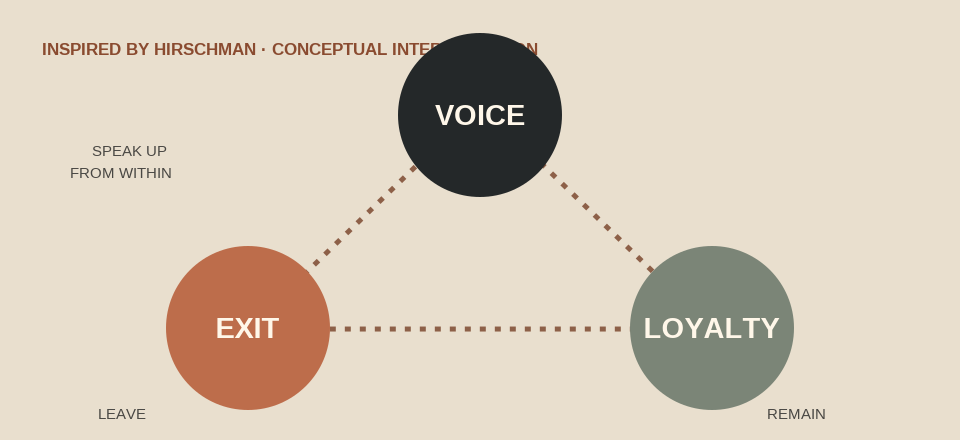
Dependency rises when essential resources, relationships or infrastructure have few substitutes. Exit, voice and loyalty interact; the best option may depend on the cost of losing what matters.

In everyday life

A small restaurant relies on one supplier who can change delivery terms overnight.

Institutional lens

Monopoly infrastructure and concentrated supply chains can shape bargaining even without direct threats.

WHAT IT CAN ENABLE

Redundancy, fair contracts and channels for grievance.

HOW IT CAN HARM

Creating lock-in, penalising departure or controlling access to essentials.

Boundary / counterexample

Interdependence is not necessarily exploitation; mutual reliance can motivate cooperation.

Who has a viable alternative, and what would one cost?

Continue the inquiry: The Cost of Being Indispensable ↗

22 / InstitutionalThe Power of SystemsCan nobody intend the harm and yet everyone reproduce it?Explore ↗

Defaults, incentives, bottlenecks, feedback loops and routines can create stable outcomes without a single villain. Systems can be redesigned, but consequences are rarely fully predictable.

In everyday life

A school's early application deadline advantages families with fast internet and flexible work hours.

Institutional lens

Institutional incentives and process design can generate persistent unequal access.

WHAT IT CAN ENABLE

Changing defaults, auditing externalities and building appeal channels.

HOW IT CAN HARM

Hiding behind 'the system' to avoid responsibility for preventable choices.

Boundary / counterexample

Systemic explanations do not erase individual agency, and not every pattern is intentional discrimination.

What outcome does the system reward even if nobody says they want it?

Continue the inquiry: The Architecture of Obedience ↗

23 / CollectiveThe Power of Ordinary PeopleWhose absence would make an ordinary day impossible?Explore ↗

Care, cleaning, repair, teaching, food provision and maintenance sustain the visible achievements of institutions. Their power is often causal without being accompanied by prestige or bargaining leverage.

In everyday life

A cleaner's absence closes a laboratory despite the researchers being publicly credited.

Institutional lens

Public health and urban services depend on frontline labour and informal coordination.

WHAT IT CAN ENABLE

Recognising invisible labour through fair pay, safety and genuine voice.

HOW IT CAN HARM

Praising essential workers symbolically while withholding resources or rights.

Boundary / counterexample

Being necessary does not automatically grant control; admiration is not a substitute for bargaining protections.

If this person stopped working for a day, what would break?

Continue the inquiry: The Hidden Power of the People Who Maintain Things ↗

24 / CollectiveThe Power to Give Power AwayCan sharing authority make a system stronger?Explore ↗

Delegation, distributed ownership, participation and well-designed accountability can increase the capacity of a group to act. Giving power away is not the same as abandoning responsibility.

In everyday life

A founder gives teammates control over decisions within clear budgets and escalation rules.

Institutional lens

Cooperatives and participatory governance share certain decision rights under explicit procedures.

WHAT IT CAN ENABLE

Giving meaningful authority, information and room to disagree.

HOW IT CAN HARM

Calling participation 'empowerment' while keeping all important decisions centralised.

Boundary / counterexample

Power sharing can fail without clear roles, resources or safeguards for minority voices.

Which decisions can people genuinely make without seeking permission?

Continue the inquiry: Can Power Be Shared Without Being Lost? ↗

02 / INTERACTIVE INVESTIGATIONS

Don't just read.
Interrogate.

Six original thinking tools. No personality labels, fake science or competition for points. All calculations are illustrative, and your entries stay on this device.

EXPERIMENT 01 / RELATIONSHIPS

The Power Map

Choose a node. Connections are conceptual, explained and contestable—not measured causal edges.

All map controls are keyboard-operable. Use the list below as a non-graphical alternative.

Choose a power form to explore its relationships.

03 / ORIGINAL WRITING

Twelve arguments.
More questions.

Essays about what power is, why it matters and where it becomes uncomfortable. Each opens as a separately indexed page.

04 / INTELLECTUAL HONESTY

The map is
not the territory.

No thinker cited here explains everything. Their frameworks disagree about conflict, legitimacy, structures, resources and collective action.

THEORETICAL FRAMEWORK

Relational vs. structural

Dahl attends to influence within relationships; Lukes asks what is excluded from decisions; Foucault examines practices that produce subjects and knowledge. These approaches illuminate different parts of a problem.

HISTORICAL INTERPRETATION

Violence vs. power

Arendt distinguishes collective power from violence. Weber examines legitimate authority. One cannot simply merge their vocabularies into a single definition.

RESEARCH / THEORY

Freedom and coordination

Sen studies substantive opportunity; Ostrom documents conditions for collective rule-making; Hirschman examines exit and voice. These are lenses, not a universal formula.

ILLUSTRATIVE SCENARIO

Why the labs avoid scores

The fictional sliders and dilemmas teach how assumptions alter interpretation. No lab predicts a person's behaviour or calculates a scientifically validated 'power index'.

Reference shelf / selected works

  1. Robert A. Dahl. The Concept of Power (1957).Power as a relationship involving influence over choices.
  2. Steven Lukes. Power: A Radical View (1974; 3rd ed. 2026).Overt decisions, agenda control, and shaping of preferences.
  3. Elinor Ostrom. Governing the Commons (1990).Cases and design principles for collective management.
  4. Amartya Sen. Development as Freedom (1999).Freedom as capabilities and substantive opportunities.
  5. Albert O. Hirschman. Exit, Voice, and Loyalty (1970).Leaving, speaking up, and the role of loyalty.
  6. Hannah Arendt. On Violence (1970).Distinguishes acting in concert from coercive violence.
  7. Pierre Bourdieu. The Forms of Capital (1986).Economic, cultural, social capital and their reproduction.
  8. Max Weber. Economy and Society: An Outline of Interpretive Sociology (1922; English ed. 1978).Legitimacy, authority and bureaucracy. Search link only; edition not verified directly.
  9. Michel Foucault. Discipline and Punish (1975; Eng. 1977).Disciplinary practices and knowledge/power; bibliography search link.
  10. John R. P. French Jr. and Bertram Raven. The Bases of Social Power (1959).A taxonomy of influence bases; bibliographic discovery link only.

Edition details and links were checked where possible in October 2026. Three bibliography entries use bibliographic discovery links rather than independently verified edition pages; see notes in the reference data.

AN INVITATION, NOT A VERDICT

“If you could change one relationship of power in the world around you, which one would you change — and who should get a say?”

sahil@sahiltayal.com · Free to share and reuse original eligible material with attribution: Sahil Tayal — https://sahiltayal.com · CC BY 4.0 for the authored material; third-party sources retain their own rights.